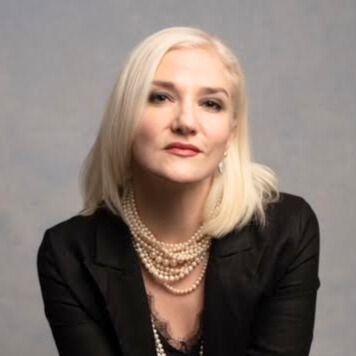
Rachel Tucker is the Owner & Designer at Kimberfire - a brilliant way to buy diamond engagement rings, fine diamond jewellery, and loose diamonds in Toronto, ON and across Canada. She was born in Winnipeg and moved to Calgary in 1995 to pursue a degree in Fine Arts, majoring in Visual Communications and Illustration. Upon graduating, Rachel worked for several years in the fashion industry before becoming a fine jewellery designer in 2002. Creating everything from custom designed diamond engagement rings to belt buckles for the Calgary Stampede, Rachel honed her skills as a premier jewellery designer. She moved to Toronto in 2008 to work for and eventually become a partner at Platinum Unlimited where she became an award winning designer. She then started her own business, Rachel Tucker Studios in 2016, specializing in custom designed luxury pieces for exclusive jewellers across the country. In 2026, Rachel Tucker Studios acquired Kimberfire, Toronto's premier bridal jewellery concierge. Rachel now leads both companies as Owner & Designer, continuing to create outstanding, one-of-a-kind jewellery for clients throughout Canada.
Engagement Ring Prices in Canada: What Every Budget Buys
Most engagement ring price guides are written for American shoppers, in American dollars, and the numbers don't carry over. This one is for Canadians. Every figure below is based on publicly listed online retail prices, in Canadian dollars, before tax, as of November 2026.
The short answer: a beautiful engagement ring in Canada can cost anywhere from about $2,500 to well past $20,000. The biggest factor in what your budget buys isn't the setting, or even the 4Cs. It's whether you choose a natural or a lab-grown diamond.
What does the average Canadian spend?
The figure quoted most often for Canada is about $3,500 (Bridebook). I'd take it with a grain of salt. It blends natural and lab-grown rings together, and the two now sit at such different price points that the average describes almost nobody's ring.
My recommendation is to skip the averages. Start with a number you're comfortable with (our post on how much to spend on an engagement ring can help), then look at what that number buys.
What each budget buys, at a glance
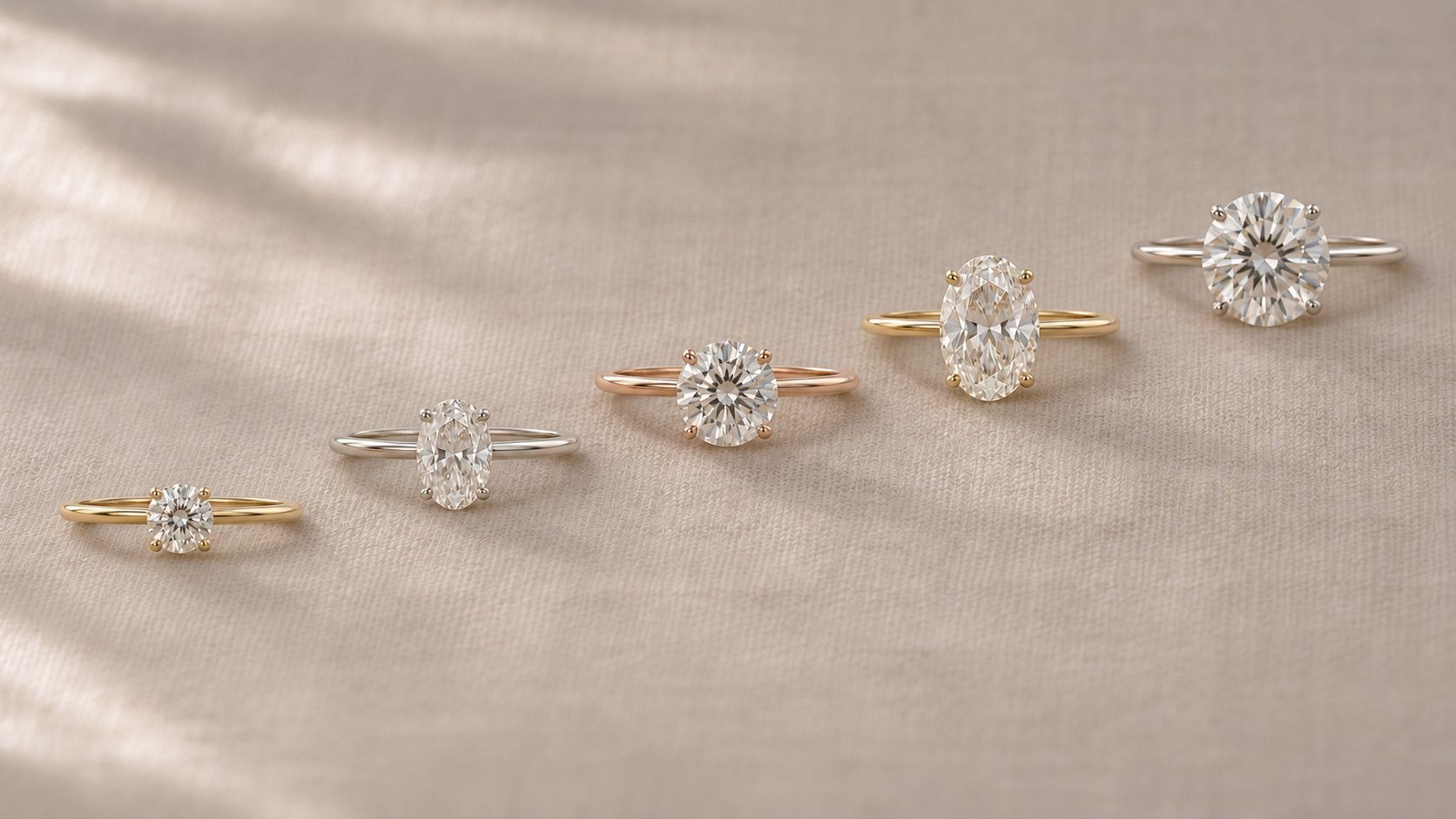
These are approximate sizes at typical online retail prices for a well-cut round diamond in a simple 14k gold solitaire. Ovals and pears go a bit further.
| Budget (CAD, before tax) | Natural diamond | Lab-grown diamond |
|---|---|---|
| Around $3,000 | 0.40-0.45 carats | 1-1.25 carats |
| Around $5,000 | 0.85-0.90 carats | About 2 carats |
| Around $10,000 | 1.30-1.40 carats | 4-4.5 carats |
| $15,000-$20,000 | 1.60-1.80 carats | Size stops being the limit |
Traditional jewellery stores may charge more, and clients often find they can go bigger than these numbers with us.
For a real-world reference point, our ready-to-wear No. 1 Solitaire is $2,370 in 14k gold with a 1 carat lab-grown diamond (F colour or better, VS clarity or better).
Natural or lab-grown? Start here
Chemically and optically, a lab-grown diamond is diamond. It's graded on the same 4Cs, and you can't tell the two apart by eye. So the decision comes down to a few things:
- Price. Size for size, lab-grown costs a fraction of natural, and the gap widens as stones get bigger.
- Value over time. Lab-grown prices have dropped year after year and are still falling, so a lab-grown diamond has little resale value. A natural diamond has a real resale market. Natural prices have also come down from their 2022 peak, which is good news if you're buying one now.
- Meaning. A natural diamond is rare, and it spent billions of years forming underground. Some people care about that a lot. Others don't, and that's fine too.
I'll be upfront about my bias. I love natural diamonds. That said, lab-grown is a great choice for plenty of couples, as long as they know what they're buying. The only wrong choice is an uninformed one. Our full comparison of natural vs lab-grown diamonds goes deeper, and you can learn more about our natural and lab-grown diamonds.
Whichever you choose, insist on an independent grading report: GIA for natural, IGI or GIA for lab-grown. Not every lab grades the same way, and this post explains why.
The 4Cs, ranked by where your money should go
If you need a refresher on the 4Cs, our diamond education page covers the basics. What most explainers skip is which C deserves your money first. My ranking, on any budget:
- Cut. This is the C you can see from across the room. Cut decides how much a diamond sparkles, and a poorly cut diamond looks dull at any size. Don't compromise here.
- Carat. Size, measured by weight. A little-known fact: prices jump at "magic" weights like 1.00, 1.50, and 2.00 carats. A 0.90 carat diamond looks almost identical to a 1.00 once it's on the hand, and it costs noticeably less.
- Colour. Graded from D (colourless) down to Z. G or H looks white to almost everyone, and in yellow or rose gold you can often go a grade or two lower without noticing.
- Clarity. The goal is "eye-clean," meaning no inclusions visible without magnification. Many VS2 and SI1 diamonds are eye-clean, so paying for VVS means paying for something you'll never see.
Why round diamonds cost more
Round brilliants are the most expensive shape per carat. In the trade, the reason is well known - cutting a round wastes more of the rough crystal than most other shapes, and it's also the most popular. Ovals, pears, cushions, princess cuts, and emerald cuts generally cost less per carat. Elongated shapes like ovals and pears also look bigger face-up than a round of the same weight. More in our guides to diamond shapes and making a diamond look larger.
The setting (where budgets quietly leak)
- Metal. Platinum costs more than gold. Yellow, white, and rose gold of the same karat cost about the same, since the colour comes from what's mixed into the gold. Between karats, 14k costs less than 18k and wears a little better day to day. White gold is usually rhodium plated and needs re-plating every so often. Our gold vs platinum post compares the two.
- Design. A solitaire costs the least and puts the most money into the centre stone. Pavé bands, halos, hidden halos, and three-stone designs add small diamonds and bench time.
- Custom vs ready-to-wear. A custom ring doesn't have to cost more than a ready-made one (we explain why here). Our pre-designed rings ship within 4 weeks. A custom ring takes about 4-6 weeks after you approve the design, so allow 8 weeks before your proposal date.
The costs nobody budgets for
- Sales tax. Prices in Canada are usually quoted before tax. In Ontario, 13% HST adds $650 to a $5,000 ring and $1,300 to a $10,000 one. Rates vary by province.
- The wedding band. It's easy to forget the second ring. Budget for it now, and see our custom wedding bands for ideas.
- Insurance. Add the ring to your home or renter's policy, or buy a standalone jewellery policy. Your insurer will likely ask for an appraisal or receipt, plus the diamond's grading report.
- Resizing. If you're guessing the size (here's how to find it out secretly), plan for a resize. Some designs, like full eternity bands, are hard to resize. We include one regular sizing free in the first year, and this post covers resizing in detail.
- Upkeep. Prongs wear down over the years. Our cleaning and inspection are complimentary, and our warranty covers manufacturing defects for life.
One cost you can skip with us - shipping, which is free and insured anywhere in Canada.
So where should your money go?
My recommendation, in order:
- Pick a number you're comfortable with, including tax and the wedding band.
- Decide natural or lab-grown. It changes everything else.
- Spend on cut before size, and on size before colour and clarity grades you can't see.
- Keep the setting simple if you want the most diamond, or let a lab-grown stone free up money for a more detailed setting.
If you'd like to see what your number buys, book a no-obligation consultation. Most of our clients work with us fully online from anywhere in Canada, and our gemologists will show you real diamonds side by side at your budget. We look forward to meeting you!
Frequently asked questions
How much does an engagement ring cost in Canada?
A quality engagement ring in Canada starts around $2,500 and can go well past $20,000. The most commonly quoted average is about $3,500, but it blends natural and lab-grown rings, so it's a rough guide at best.
Is a lab-grown diamond a real diamond?
Yes. It's chemically and optically diamond and graded on the same 4Cs. The differences are where it came from, what it costs, and what it's worth later.
Are engagement ring prices in Canada quoted with tax?
Usually not. Expect GST, HST, or PST on top, depending on your province. In Ontario, that's 13% HST.
How long does it take to get an engagement ring?
Our pre-designed rings ship within 4 weeks. Custom rings take about 4-6 weeks after you approve the design, so we recommend allowing 8 weeks before your proposal date.
About Kimberfire
A brilliant way to buy high-quality custom engagement rings, diamonds, and jewellery. Discover expert guidance, complete transparency, and unmatched value in Toronto and across Canada.
Share this entry
You might also like