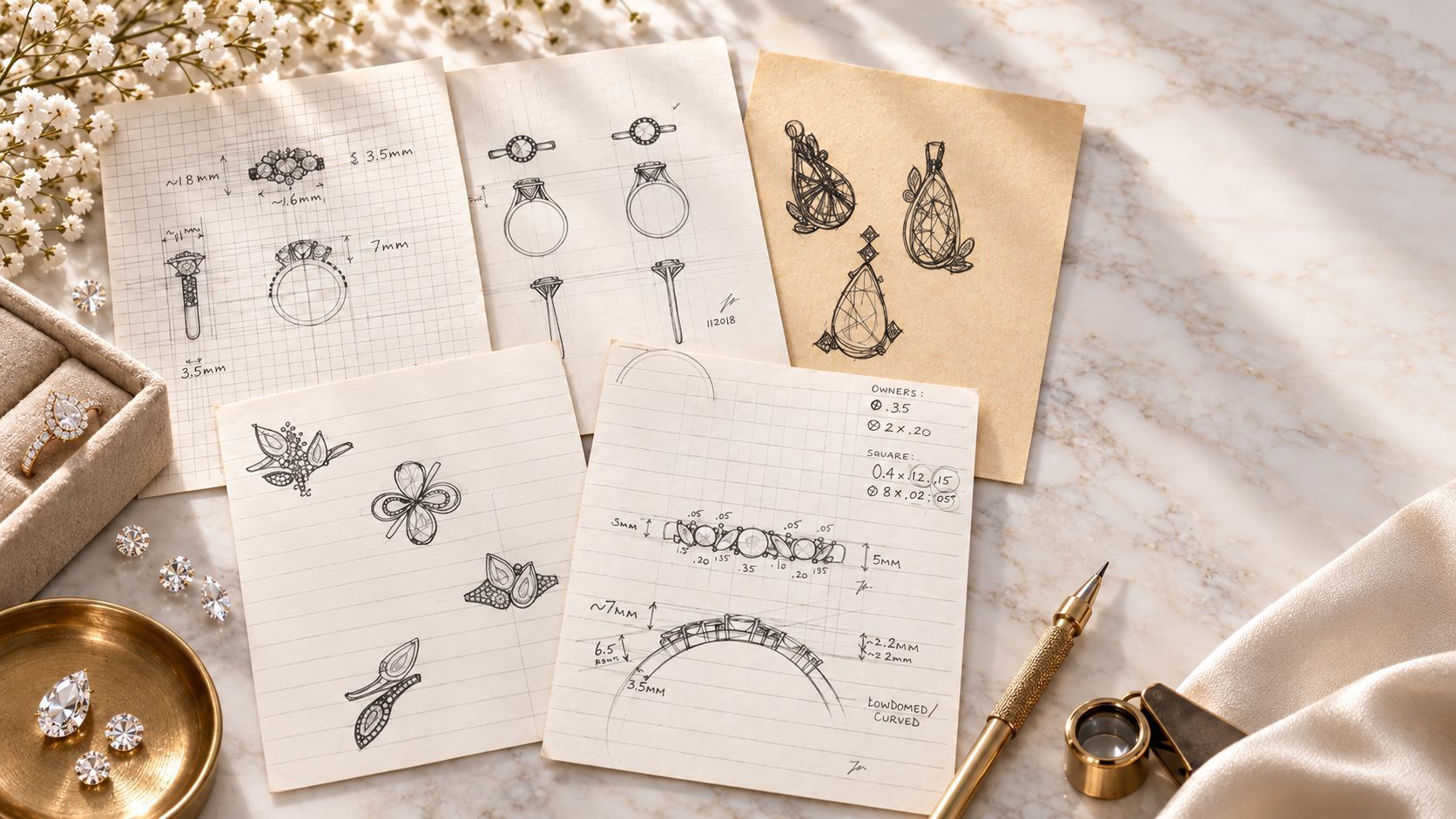
Rachel Tucker is the Owner & Designer at Kimberfire - a brilliant way to buy diamond engagement rings, fine diamond jewellery, and loose diamonds in Toronto, ON and across Canada. She was born in Winnipeg and moved to Calgary in 1995 to pursue a degree in Fine Arts, majoring in Visual Communications and Illustration. Upon graduating, Rachel worked for several years in the fashion industry before becoming a fine jewellery designer in 2002. Creating everything from custom designed diamond engagement rings to belt buckles for the Calgary Stampede, Rachel honed her skills as a premier jewellery designer. She moved to Toronto in 2008 to work for and eventually become a partner at Platinum Unlimited where she became an award winning designer. She then started her own business, Rachel Tucker Studios in 2016, specializing in custom designed luxury pieces for exclusive jewellers across the country. In 2026, Rachel Tucker Studios acquired Kimberfire, Toronto's premier bridal jewellery concierge. Rachel now leads both companies as Owner & Designer, continuing to create outstanding, one-of-a-kind jewellery for clients throughout Canada.
Solitaire Engagement Rings: Why One Stone Still Says It All
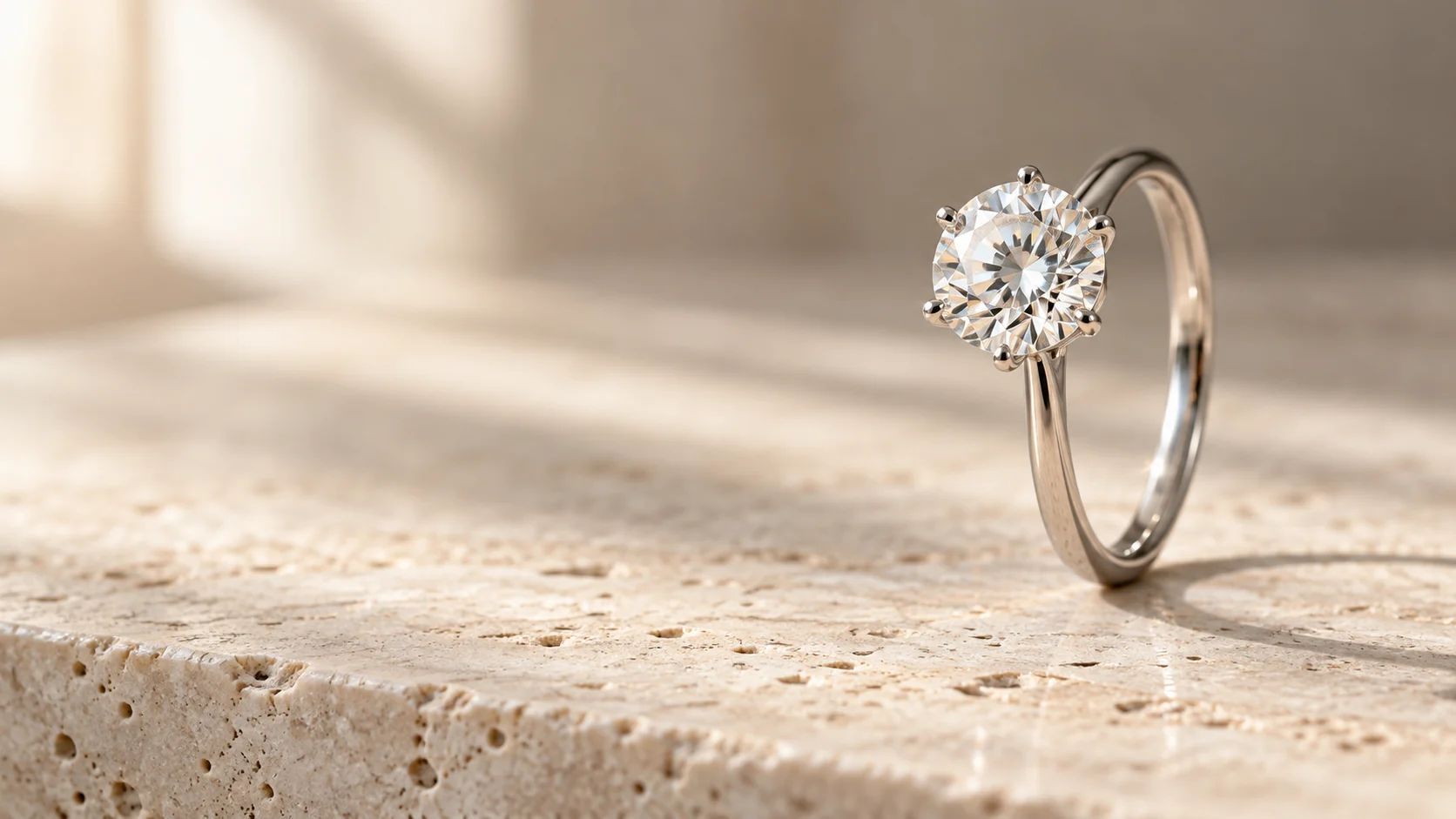
Full disclosure - we design a lot of custom engagement rings at Kimberfire, so I have nothing against a complicated build (a hidden halo, a sapphire tucked under the stone... bring it on). But there's one design I think everyone should at least consider before deciding: the solitaire.
A solitaire engagement ring is about as simple as it gets. One stone, one band. It's been the go-to engagement ring for well over a century, and it's surprisingly easy to get wrong, precisely because it's so simple.
Below I'll cover what actually makes a ring a solitaire, why the style has lasted, how to choose the stone, setting and metal, and the honest trade-offs worth knowing before you buy.
What makes a ring a solitaire?
A solitaire is a ring with a single centre stone and nothing competing with it. No side stones, no halo, no accent diamonds - just the stone, the setting that holds it and the band.
A little known fact: the word gets stretched a lot in the trade. You'll see rings with a halo of small diamonds around the centre stone sold as "solitaires", and technically they aren't. A halo is its own style, and so is a three-stone ring.
There are two grey areas worth knowing about:
- Pavé band: small diamonds set along the band. Many jewellers still call this a solitaire (or a "solitaire with accents"), though a purist wouldn't.
- Hidden halo: a thin row of diamonds tucked under the centre stone, only visible from the side. From the top it reads as a solitaire, which is the whole point.
My take - if it looks like one stone on a band from above, call it whatever you like. Just know what you're comparing when you shop, because a plain band and a pavé band can be quite different in price for what looks like the same "solitaire" online.
A little history: the ring that lifted the diamond
Before the late 1800s, most diamonds were set low in a collar of metal. That protected the stone, but it also blocked a lot of the light that makes a diamond sparkle.
In 1886, Tiffany & Co. introduced what became the Tiffany Setting: a round diamond raised above a plain band on six slender prongs, so light could reach it from almost every angle. It caught on so completely that the six-prong solitaire is still what most people picture when they hear "engagement ring" (look closely at the ring emoji on an iPhone).
Nearly every solitaire since has been a variation on that one idea - get the metal out of the way and let the stone do the talking.
Why the solitaire works: nowhere to hide
With a solitaire, every eye goes straight to the centre stone. That's the appeal, and it's also the catch. A halo or a pavé band adds sparkle around the edges and can help a so-so stone look better than it is. A solitaire can't do that, so if the cut is mediocre, you'll see it.
The flip side is budget. With no side stones to pay for, more of your money goes into the one stone you'll actually be looking at for decades. If you're still working out what to spend, our engagement ring calculator is a good place to start.
It's also the easiest engagement ring to live with. It looks just as right at a black-tie wedding as it does on a Tuesday morning coffee run, and it pairs with most wedding bands without any fuss.
Choosing the stone for your solitaire
Since the stone carries the whole ring, this is where most of your decision-making (and budget) should go.
Diamond or something with colour?
Diamonds are the classic choice for good reason. They're the hardest natural material (10 on the Mohs scale), and a well-cut diamond has a brilliance that's hard to match.
Coloured stones make beautiful solitaires too, but my recommendation is to choose for durability, not just looks. Sapphires (which come in far more colours than blue) and rubies are both a 9 on the Mohs scale and hold up well to everyday wear. Emeralds are stunning but softer and often have natural fractures, so for a ring worn every day I'd go in with eyes open, or protect it with a bezel setting.
Which shape?
- Round brilliant: the most sparkle and the classic look, usually at the highest price per carat.
- Oval, pear and marquise: elongated shapes that look larger than a round of the same weight and flatter the finger. Watch for a "bow-tie", a dark band across the middle that some stones show badly and others barely at all.
- Emerald and Asscher: step cuts with a "hall of mirrors" look. Gorgeous, but inclusions are easier to see, so clarity matters more here.
- Cushion, radiant and princess: squarer shapes with plenty of sparkle. Princess cuts have sharp corners, so make sure they're protected (V-shaped prongs are your friend).
Curious what size people usually go for? Here's our post on the average carat size for an engagement ring.
Solitaire settings: prongs, height and metal
A solitaire setting has very few parts, so each one makes a visible difference.
Four prongs, six prongs or a bezel?
- Four prongs: shows the most of the stone and gives a round diamond a slightly squarer outline.
- Six prongs: a rounder look and a little more security. If one prong ever gets bent, five are still holding the stone.
- Bezel: a thin rim of metal around the whole stone. The most protective option with a clean, modern look, at the cost of a bit of light.
High or low?
A higher setting (often a "cathedral" style, where the band sweeps up to meet the stone) lets in more light and really shows the stone off. A lower setting snags less and suits active hands. If you work with your hands a lot, I'd lean lower.
Which metal?
- Platinum: naturally white, dense and hard-wearing. It develops a soft patina over time that can be polished back up.
- White gold: a similar look for less, but it's plated with rhodium that wears off and needs redoing every so often.
- Yellow or rose gold: warm, classic and very much back in style.
A little trade secret: a diamond set in yellow or rose gold can look perfectly white at a lower colour grade than it would in platinum or white gold, because the warm metal masks a hint of warmth in the stone. That can mean real savings without anyone noticing a difference.
So should everyone get a solitaire? Not necessarily.
As much as I love them, solitaires come with a few honest trade-offs:
- Size reads honestly. A halo can make a centre stone look noticeably bigger. A solitaire shows exactly what you bought, so if face-up size is the priority on your budget, a halo or an elongated shape may serve you better.
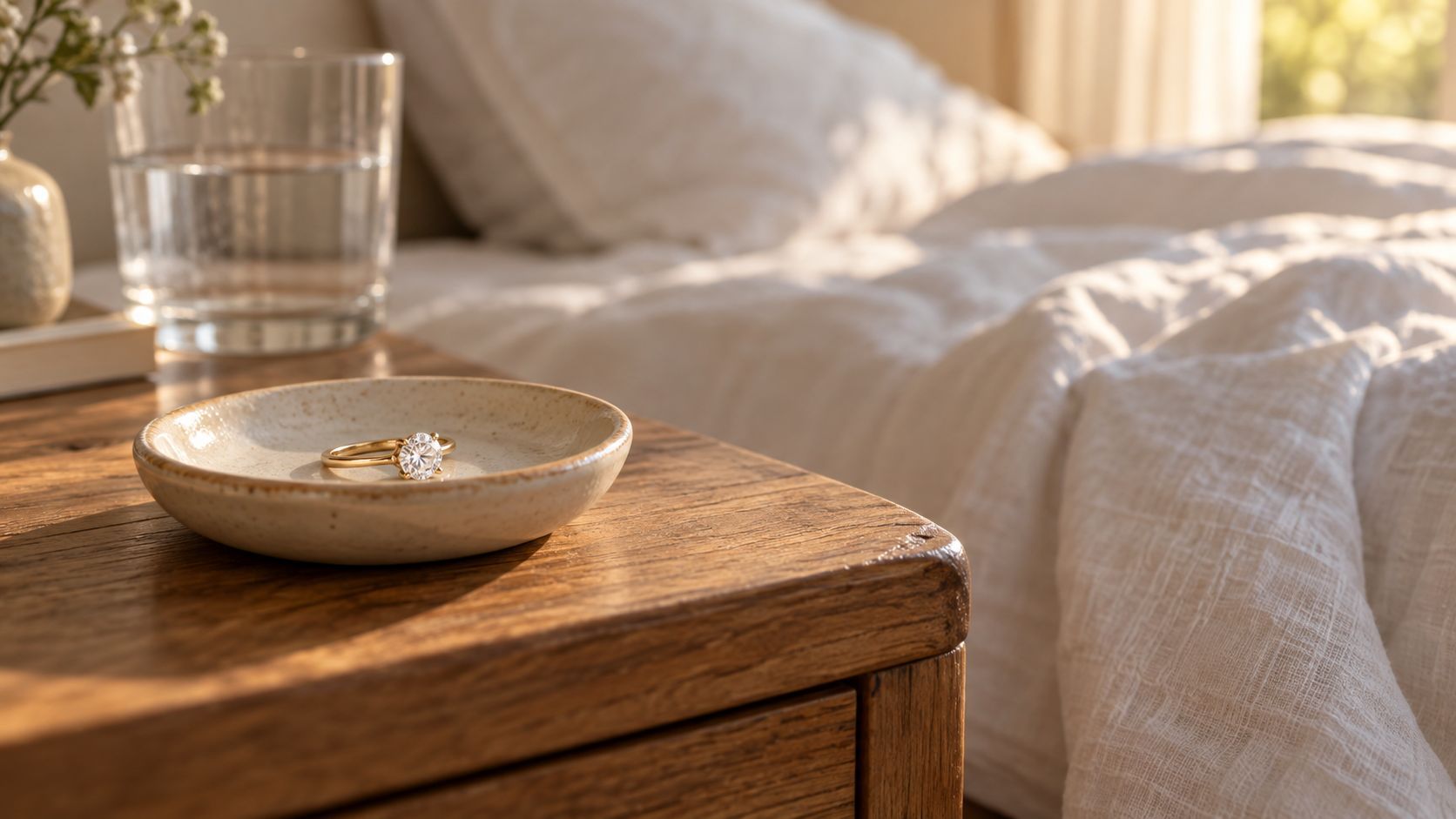
- High settings snag. Sweaters, hair, gloves... anyone who has worn one for a while knows. (Related: should you sleep with your engagement ring on?)
- Prongs need checking. They wear down over time, so have them looked at at least once a year. Our jewellery care guide covers the rest.
- The stone carries everything. Nowhere to hide, remember? If the budget forces a compromise, my recommendation is to give up a little carat weight before you give up cut quality.
My verdict: if you love clean design and want the most stone for your money, a solitaire is very hard to beat. If you want maximum size or something that feels more one-of-a-kind, there are great alternatives (and if you'd like help weighing them, let's talk!).
Solitaire engagement ring FAQ
Is a solitaire engagement ring still in style?
Yes. It's been the default engagement ring since the late 1800s, and because it doesn't chase trends, it doesn't go out with them either.
Does a solitaire make the diamond look smaller?
Not smaller, just accurate. There's nothing around the stone adding visual size the way a halo does. If size matters most, an oval, pear or marquise will look bigger than a round of the same carat weight.
Can a solitaire have diamonds on the band?
Yes, that's usually called a solitaire with a pavé band. Purists will say it's no longer a true solitaire, but from the top it still reads as one stone.
How much does a solitaire engagement ring cost?
Because the setting is simple, the price comes down almost entirely to the stone you choose. Our engagement ring calculator can help you land on a budget you're comfortable with.
Thinking about a solitaire?
The beauty of a solitaire is how little stands between you and the stone, which means every choice you do make really counts. If you'd like a hand weighing shapes, settings or budget, reach out to our team. We're happy to help even if you're just starting to look (no pressure).
We'd love to hear from you!

About Kimberfire
A brilliant way to buy high-quality custom engagement rings, diamonds, and jewellery. Discover expert guidance, complete transparency, and unmatched value in Toronto and across Canada.
Share this entry
You might also like