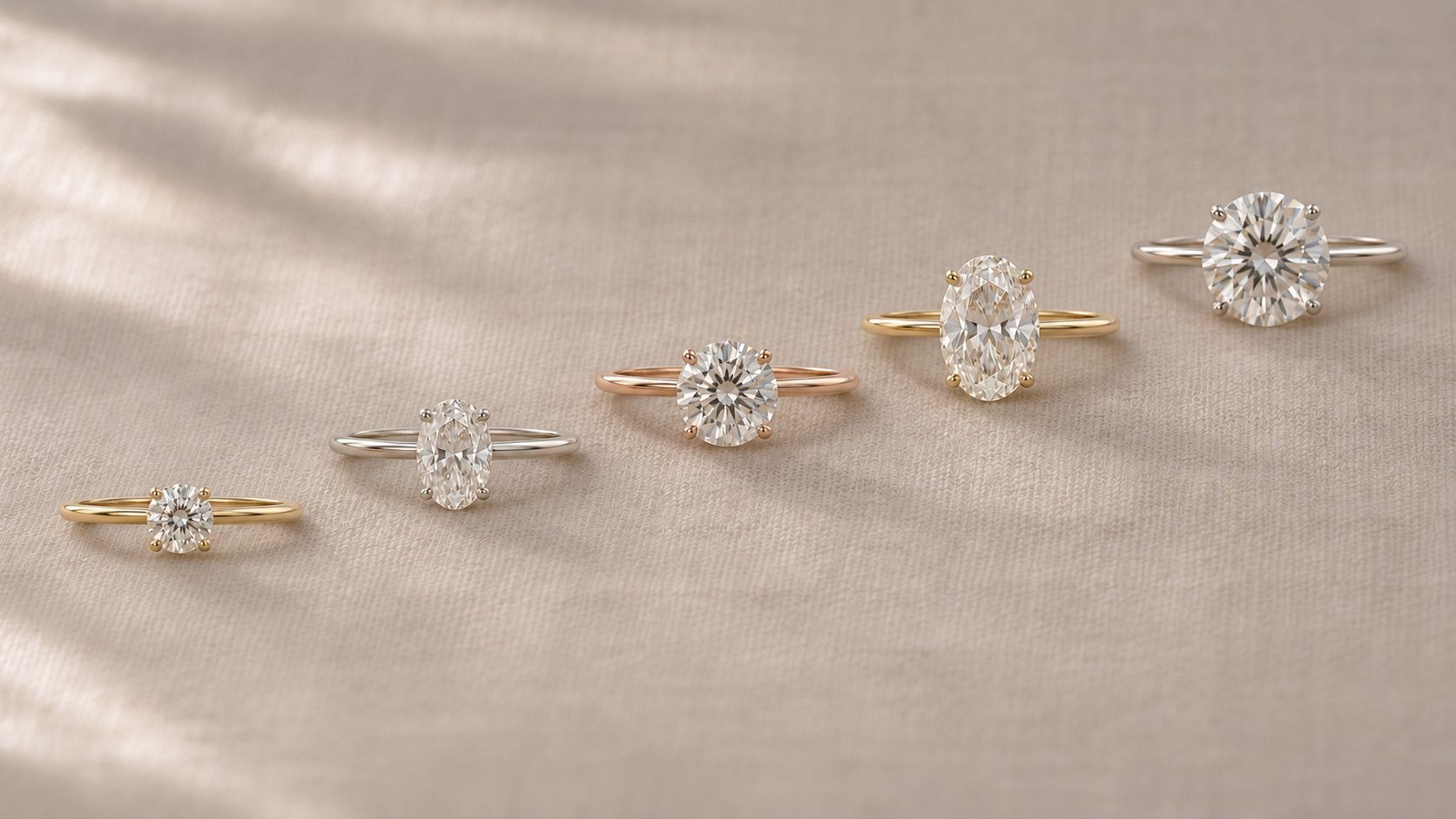
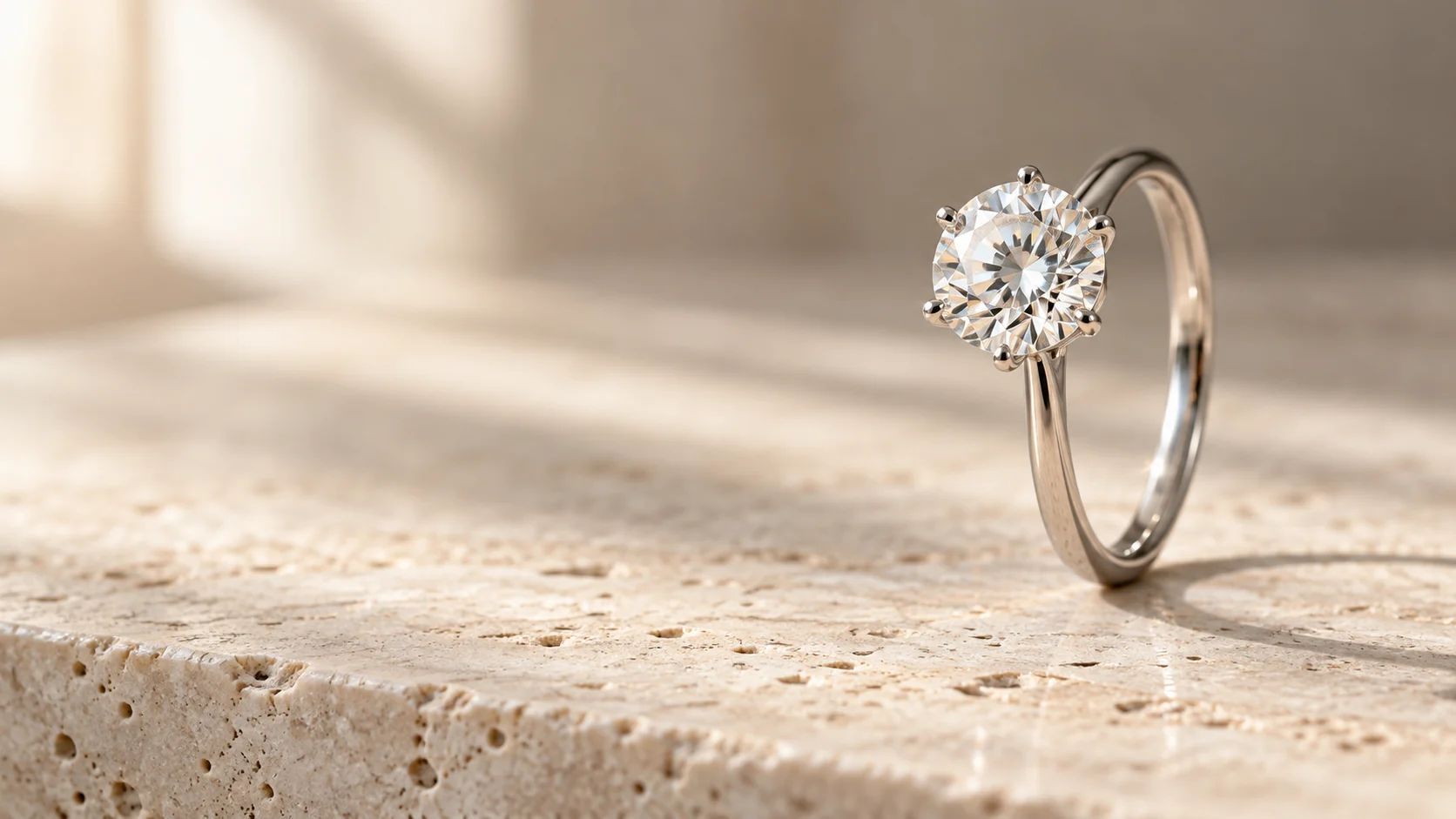
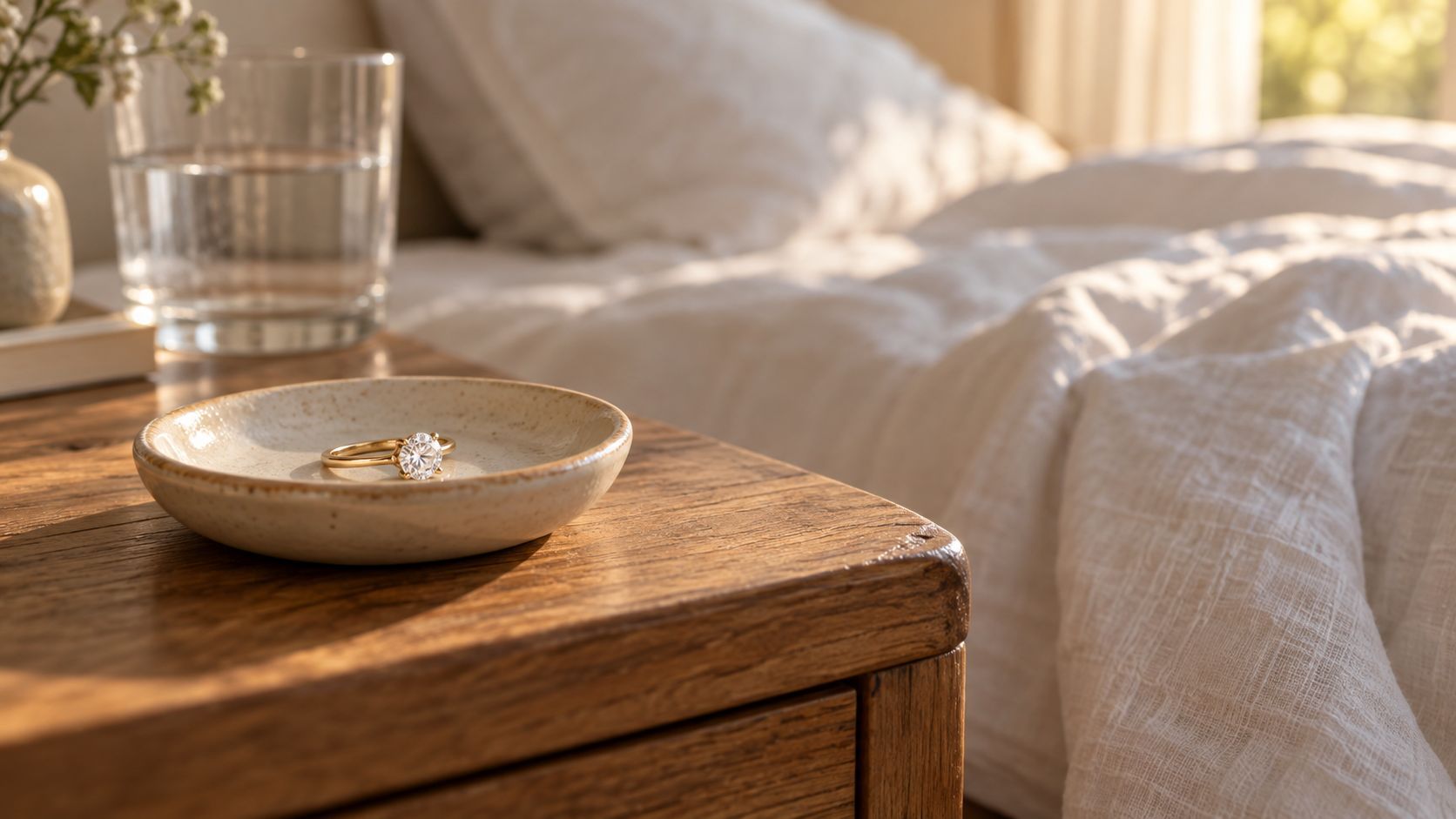
Rachel Tucker is the Owner & Designer at Kimberfire - a brilliant way to buy diamond engagement rings, fine diamond jewellery, and loose diamonds in Toronto, ON and across Canada. She was born in Winnipeg and moved to Calgary in 1995 to pursue a degree in Fine Arts, majoring in Visual Communications and Illustration. Upon graduating, Rachel worked for several years in the fashion industry before becoming a fine jewellery designer in 2002. Creating everything from custom designed diamond engagement rings to belt buckles for the Calgary Stampede, Rachel honed her skills as a premier jewellery designer. She moved to Toronto in 2008 to work for and eventually become a partner at Platinum Unlimited where she became an award winning designer. She then started her own business, Rachel Tucker Studios in 2016, specializing in custom designed luxury pieces for exclusive jewellers across the country. In 2026, Rachel Tucker Studios acquired Kimberfire, Toronto's premier bridal jewellery concierge. Rachel now leads both companies as Owner & Designer, continuing to create outstanding, one-of-a-kind jewellery for clients throughout Canada.
What Does a $5,000 Engagement Ring Look Like in Canada?
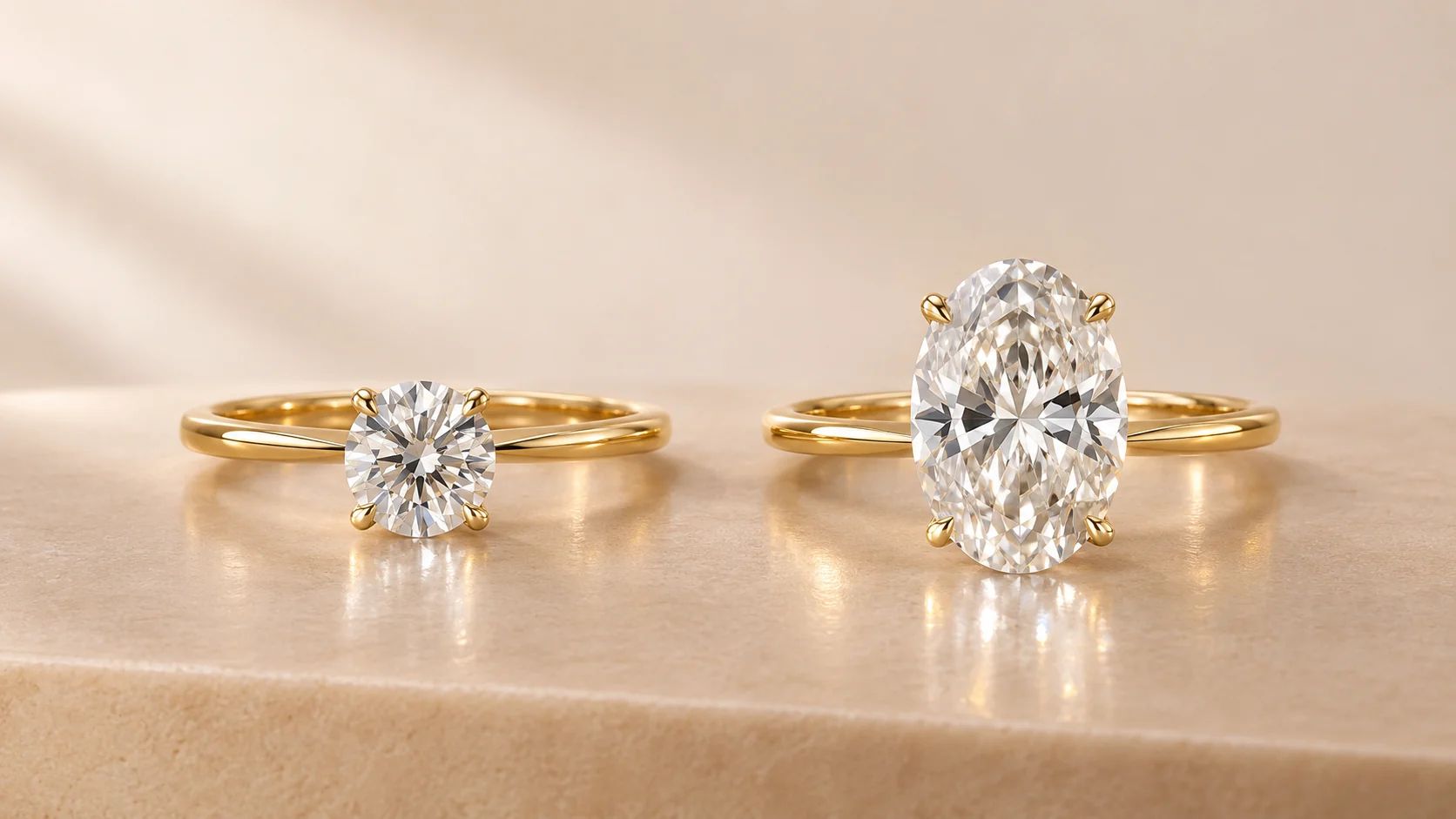
A $5,000 budget is a popular one, and it's where the advice online has aged the worst. Most guides still say it buys a diamond a little under a carat. That's true for a natural diamond. With a lab-grown diamond, the same $5,000 buys a stone more than twice that size.
So the question at $5,000 isn't "how big?" It's "which kind of diamond?"
The short answer: in Canada, $5,000 before tax buys roughly a 0.85-0.90 carat natural diamond, or a lab-grown diamond of about 2 carats, in a classic 14k gold solitaire. Ovals and pears look a little bigger for the same weight. Figures are based on publicly listed online retail prices in CAD, as of November 2026. Traditional stores may charge more, and clients often find they can go bigger with us.
Is $5,000 a lot for an engagement ring?
It's a healthy budget. The most commonly quoted average for an engagement ring in Canada is about $3,500 (more on that number in our Canadian engagement ring price guide), so $5,000 sits comfortably above it.
What matters more is that $5,000 is enough for a beautiful, well-made ring with either kind of diamond. You don't need to stretch past it to get something you'll love. Whether it's the right number for you is a separate question, and our post on how much to spend on an engagement ring can help.
Two very different $5,000 rings
| At $5,000 (CAD) | Natural diamond | Lab-grown diamond |
|---|---|---|
| Typical size (round) | 0.85-0.90 carats | About 2 carats |
| Colour and clarity to aim for | I colour, eye-clean SI1 | F colour, VS1 clarity |
| Grading report | GIA | IGI or GIA |
| Resale value | A real resale market | Minimal |
The natural route: aim for 0.90, not 1.00
With a natural diamond, $5,000 lands you a little under the 1 carat mark, and that's a good place to be. Prices jump at 1.00 carats, so a 0.90 costs noticeably less and looks almost identical on the hand.
To get the most from a natural diamond at this budget:
- Put cut first. An excellent-cut 0.80 will outshine a poorly cut 0.90.
- Go eye-clean, not flawless. VS2 or SI1 is often clean to the eye. Paying for VVS at this budget costs you size for a difference you won't see.
- Consider an oval or pear. Both often cost a little less per carat than a round, and they look bigger face-up for the same weight. Here's more on making a diamond look larger.
The lab-grown route: size stops being the problem
With a lab-grown diamond, $5,000 goes a long way. Our ready-to-wear No. 1 Solitaire is $2,370 with a 1 carat lab-grown diamond, which tells you how far the rest of the budget can stretch. At $5,000, a custom ring with a stone around 2 carats is realistic. Our lab-grown diamonds start at G colour and VS clarity, and most of our clients land on F/VS1, so you're not trading quality for size.
So should you buy the biggest lab-grown diamond $5,000 can buy? Not necessarily.
- Size it to the hand. On a slender finger, a 3 carat stone can start to look like costume jewellery.
- Think about everyday wear. Bigger stones sit higher and catch on sweaters, gloves, and hair.
- Remember where prices are heading. Lab-grown prices keep falling, so a bigger stone buys you size, not value.
For most people, my recommendation is a lab-grown diamond of about 2 carats, or a touch smaller if you'd like a setting with some detail (a pavé band or hidden halo).
Which settings make sense at $5,000?
- Solitaire: my pick for a natural diamond at this budget, since it keeps the most money in the centre stone.
- Halo: a ring of small diamonds around the centre stone. It makes a natural diamond look noticeably larger face-up.
- Pavé or hidden halo: adds sparkle without changing the look of the centre stone. A good fit with lab-grown, if you leave a little room in the budget for it.
- Three-stone: lovely, but with natural diamonds at $5,000 it splits the budget three ways and the centre stone shrinks. It works better with lab-grown.
For metal, 14k gold in any colour keeps more of the budget in the diamond. Platinum is beautiful, but at $5,000 it takes a bigger bite (gold vs platinum, compared).
Browse our ready-to-wear engagement rings for ideas, or design a custom ring from scratch.
Don't forget the extras
Before you lock in $5,000, remember what sits on top of it. In Ontario, 13% HST adds $650, and the wedding band and insurance come after that. Our price guide covers the costs to plan for.
Should you stretch to $10,000?
Doubling the budget does different things depending on the diamond. With natural, it takes you across the 1 carat line. With lab-grown, it buys more than most people need.
My take
A $5,000 budget buys a beautiful ring either way. Choose natural and you're buying a rare diamond a little under a carat, with a real resale market behind it. Choose lab-grown and you're buying size, plus room for a more detailed setting. Neither is the wrong answer, as long as it's the one you meant to pick.
If you'd like to compare both at your budget, book a no-obligation consultation with our gemologists. We'll show you real diamonds side by side, in our Toronto studio or online from anywhere in Canada.
Frequently asked questions
What size diamond can I get for $5,000 in Canada?
Roughly 0.85-0.90 carats for a natural round diamond, or about 2 carats for a lab-grown one, in a 14k gold solitaire. Prices in CAD, as of November 2026.
Is $5,000 enough for a natural diamond engagement ring?
Yes. It buys a well-cut natural diamond a little under 1 carat that looks clean to the eye.
Can I get a custom engagement ring for $5,000?
Yes. Our custom rings are designed and made in Toronto and take about 4-6 weeks after you approve the design, so allow 8 weeks before your proposal date.
Is a lab-grown diamond a good investment?
No, and I'd be wary of anyone who tells you otherwise. Lab-grown prices keep falling, so resale value is minimal. Buy lab-grown because you love the ring, not as a store of value.

About Kimberfire
A brilliant way to buy high-quality custom engagement rings, diamonds, and jewellery. Discover expert guidance, complete transparency, and unmatched value in Toronto and across Canada.
Share this entry
You might also like